Skip to product information
1 of 5

Bunny Toy Knitting Pattern

Bunny Toy Knitting Pattern

A little bunny, with an expression of its own

Long ears, a rounded body and a little embroidered face. Knit your bunny in five small pieces, settling into rows of garter stitch before sewing it together and adding the expression that makes it yours.
  • Confident beginner
  • Written directions · Photos · Technique videos

Digital knitting pattern

Regular price £6.99 GBP
Regular price Sale price £6.99 GBP
Sale Sold out
  • Knit every piece flat in garter stitch
  • Follow photos, illustrations and linked technique videos
  • Use a small amount of yarn and embroider the face
See sizes, yarn and tools ↓

What is inside the pattern?

A downloadable pattern with written instructions, illustrations, photos and links to technique videos. The guidance covers the body, head, two ears and tail, plus assembly and the embroidered face.

One size, with the finished dimensions depending on your yarn and knitting tension.

Is this the right level for me?

Confident beginner. You should be comfortable casting on, knitting, increasing into the front and back of a stitch, and knitting two together. The pattern also uses an i-cord edge, with a video link for that step.

All five pieces are knitted back and forth in garter stitch. Sew them together with mattress stitch, add the filling and embroider the face last. You can use straight needles or a circular needle for the flat knitting.

Assembly & embroidered details

The body, head, two ears and tail are knitted separately. Join the pieces with mattress stitch, add the filling and embroider the face. The pattern includes photos, illustrations and video links for the finishing steps.

Materials needed

Use yarn that knits into a close fabric on your chosen needles. The sample bunnies use approximately 23.5–35 g, with yarns ranging from 85 m per 25 g to 100–110 m per 50 g. Compare the sample combinations in the table before choosing leftovers.

Gather about 15–20 g of carded wool or another filling, a small amount of black yarn for the face, stitch markers, a blunt-tipped assembly needle and a smaller embroidery needle. Stitch wires are optional.

Sample needle sizes are 3 mm, 4 mm and 4.5 mm. Use straight needles or a circular needle at a comfortable length for working flat.

Delivery and Refund Policy

Digital Delivery:

  • Instant PDF download after purchase.
  • Download link active for 30 days.

Technical Issues:

Returns and Refunds:

  • No returns or refunds after download.
  • Duplicate purchase? Email support@knitcy.com for a refund.
View full details

Plan your knitting project

Swipe across the table, or use the arrows.

Size and yarn at a glance
Sample yarnNeedle sizeGarter gauge per 10 cmYarn usedLength without ears
Airy cashmere blend · 85 m/25 g 4.5 mm 19 stitches Approx. 23.5 g Approx. 21 cm
Alpaca/cotton/wool blown yarn · 110 m/50 g 4 mm 20 stitches Approx. 35 g Approx. 22 cm
Merino/cashmere blend · 100 m/50 g 3 mm 20 stitches Approx. 35 g Approx. 21 cm

Pattern & guidance

A downloadable pattern with written instructions, illustrations, photos and links to technique videos. The guidance covers the body, head, two ears and tail, plus assembly and the embroidered face.

One size, with the finished dimensions depending on your yarn and knitting tension.

Yarn & tools

Use yarn that knits into a close fabric on your chosen needles. The sample bunnies use approximately 23.5–35 g, with yarns ranging from 85 m per 25 g to 100–110 m per 50 g. Compare the sample combinations in the table before choosing leftovers.

Gather about 15–20 g of carded wool or another filling, a small amount of black yarn for the face, stitch markers, a blunt-tipped assembly needle and a smaller embroidery needle. Stitch wires are optional.

Sample needle sizes are 3 mm, 4 mm and 4.5 mm. Use straight needles or a circular needle at a comfortable length for working flat.

Gauge

Approximately 20 stitches per 10 cm (4 in) gives a bunny about 21–22 cm long without the ears. The airy cashmere-blend sample uses 19 stitches per 10 cm and measures about 21 cm.

Choose needles that make the fabric close enough to hold the filling. Yarn thickness affects the finished size, so check the fabric as well as the stitch count.

Construction & techniques

Confident beginner. You should be comfortable casting on, knitting, increasing into the front and back of a stitch, and knitting two together. The pattern also uses an i-cord edge, with a video link for that step.

All five pieces are knitted back and forth in garter stitch. Sew them together with mattress stitch, add the filling and embroider the face last. You can use straight needles or a circular needle for the flat knitting.

Picture the finished project

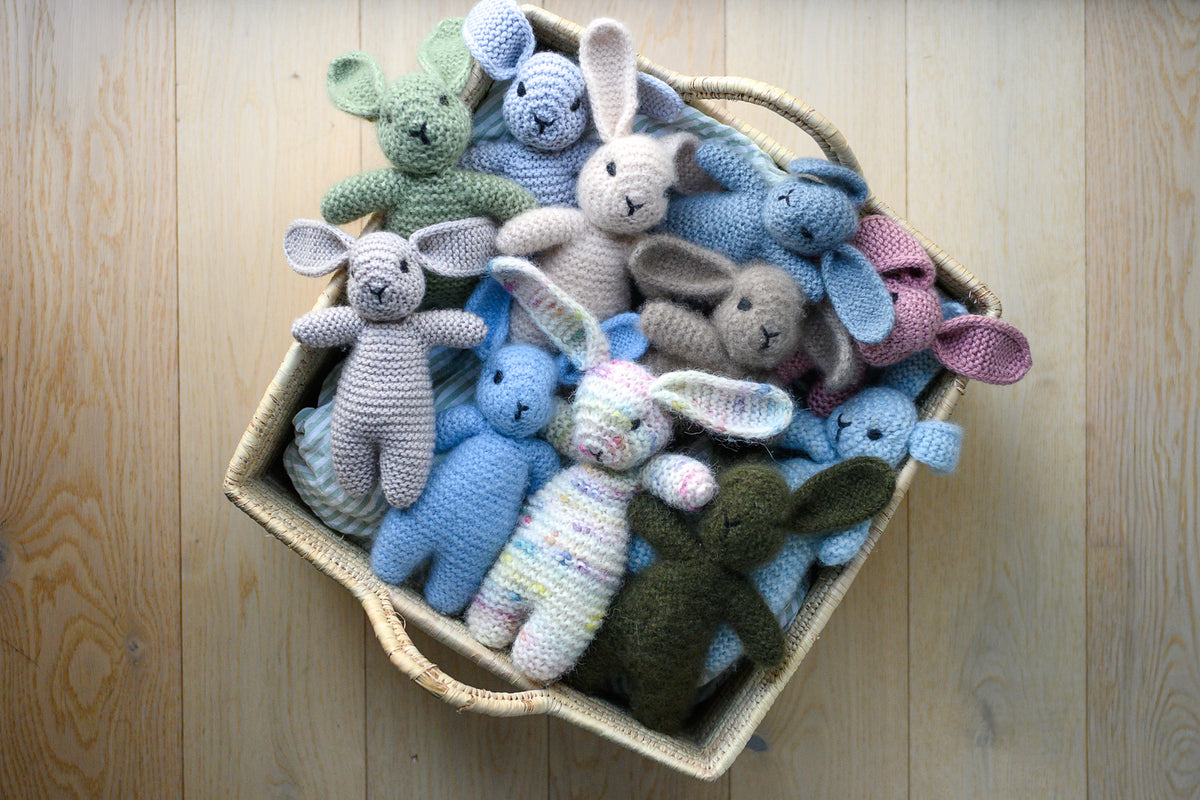
A basket of finished garter-stitch bunnies in different colours

The finished project

See what a different yarn can do

The same bunny takes on a different look in a fluffy blown yarn or a smoother wool blend. The garter ridges, long ears and embroidered features stay visible, while the surface changes with the yarn.

Use the three sample combinations to judge the fabric you want before choosing a ball from your stash.

From the first stitch to the finish

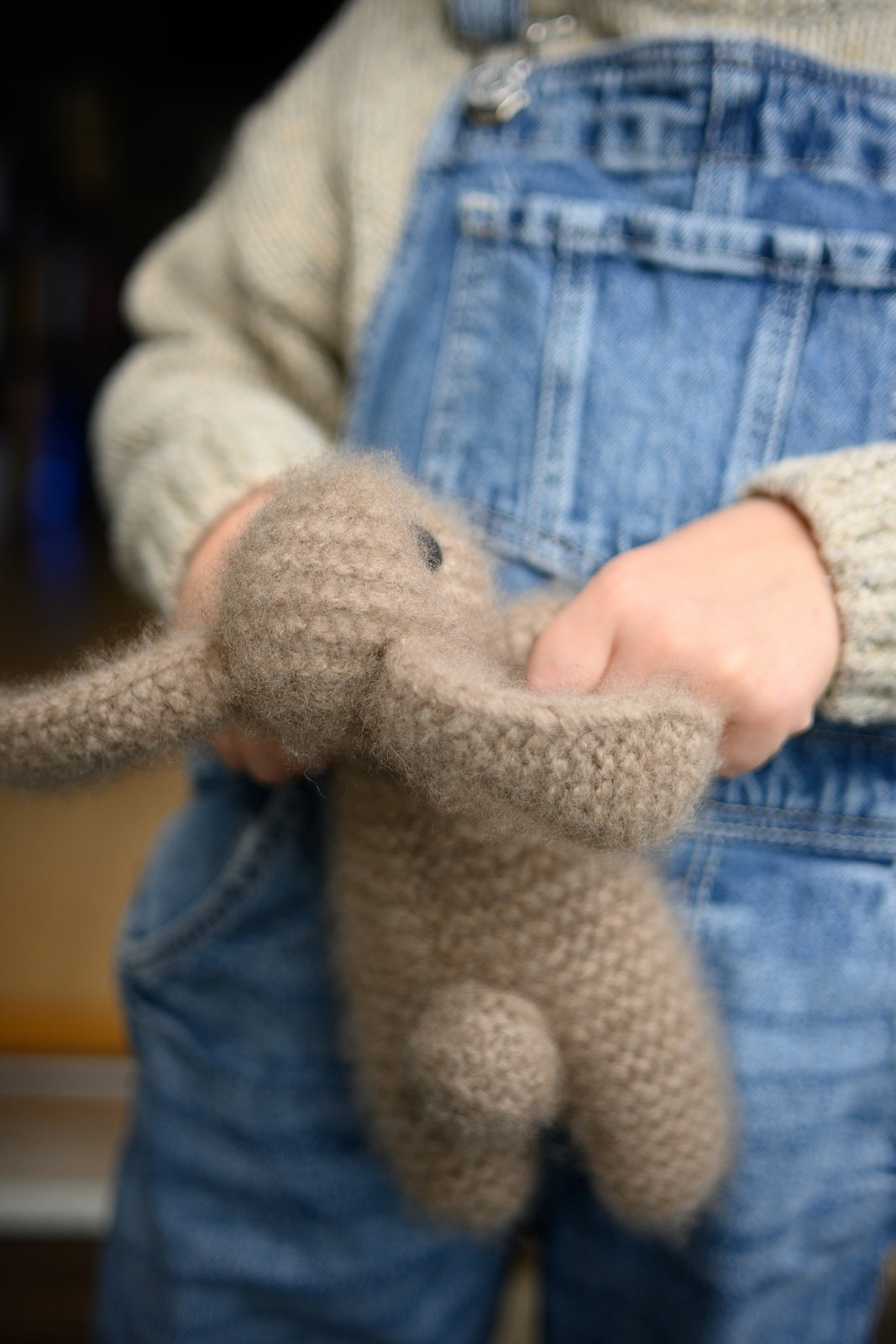
Knitted bunny held in one hand showing its size and embroidered face

Your time with the needles

The last stitches give it a face

Once the pieces are knitted, sew them together along the back with mattress stitch and add the filling. The face is embroidered at the end, with a linked technique video for that step.

Keep the face simple so the small stitches stand out against the garter ridges.

A few things before you begin

Choose your size, check your yarn and plan your first stitches.

Can I use yarn left over from another project?

Yes. The pattern works with different yarn types and weights. Choose needles that produce a close fabric, and expect the finished size to change with yarn thickness. The sample bunnies use about 23.5–35 g.

How much sewing is involved?

You knit the body, head, two ears and tail separately, then assemble them with mattress stitch and add the filling. The face is embroidered last. Photos, illustrations and technique-video links accompany the written directions.

What gauge should I aim for?

Approximately 20 stitches per 10 cm (4 in) gives a bunny about 21–22 cm long without the ears. The airy cashmere-blend sample uses 19 stitches per 10 cm and measures about 21 cm.

Choose needles that make the fabric close enough to hold the filling. Yarn thickness affects the finished size, so check the fabric as well as the stitch count.

How do I receive my pattern?

After payment, follow the download link with your order. Save the file so you can return to the instructions when you’re ready to make it.

Choose your yarn. Make your little bunny.

Choose your yarn and make the project your own.

Get the Pattern · £6.99